Biocracked
←

#lipid metabolism

1 article
Approach: macro science (with a conceptual split). Palette: D, bold color field.

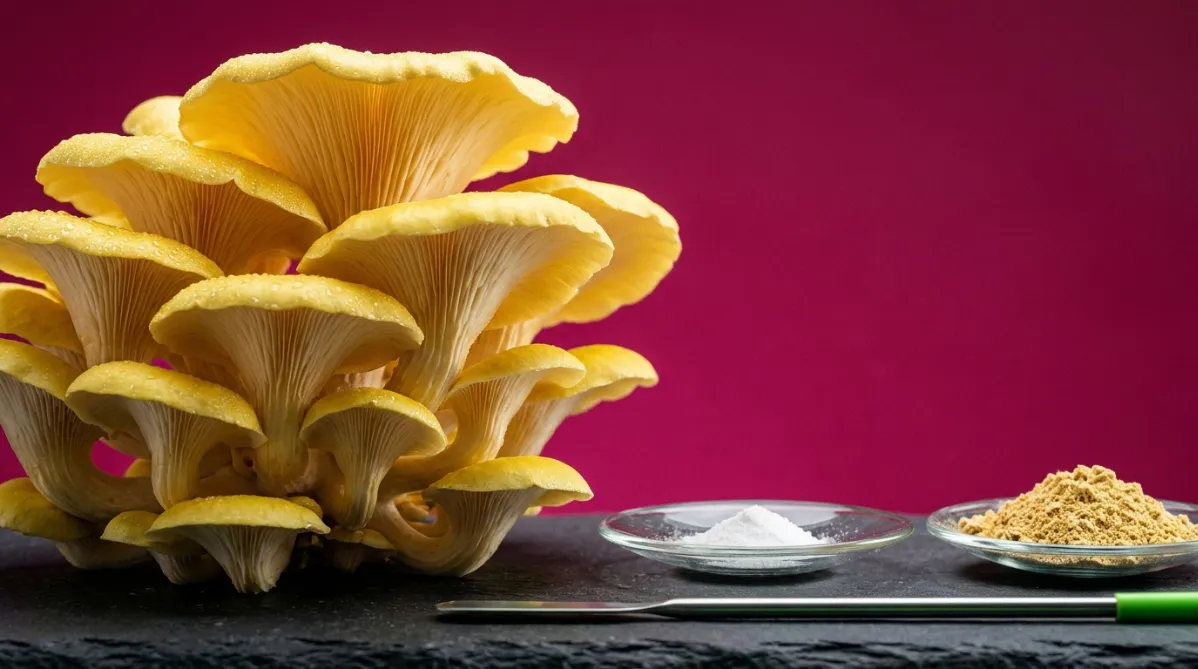
Extreme close-up photograph of a cluster of golden oyster mushrooms (Tamogitake), their ruffled, canary-yellow caps and fine gill structures sharply detailed, shot at a slight low three-quarter angle against a saturated magenta backdrop. In the foreground, a small glass watch dish holds a pinch of fine white crystalline powder, the isolated compound, sitting plain and inert beside a heap of fawn-yellow dried mushroom powder in a second dish. Soft directional studio light from the upper left gives the caps a translucent glow and creates crisp, short shadows. Tiny dew-like droplets cling to the gills. A single thin electric green stem of a lab spatula glints at the edge of the frame. Mood: curious, vivid, quietly skeptical, with the mushroom clearly outshining the isolate. No text or labels.
research

Этот гриб снижает жир в печени грызунов, а его «звёздное» соединение — нет

BY NOVA CHEN ·

Эрготионеин считается главным полезным соединением грибов, но новое исследование на грызунах усложняет эту историю. Крысы и ожиревшие мыши, получавшие в рационе порошок золотого устрицеподобного гриба (Тамогитаке), показали снижение уровня холестерина и триглицеридов в печени, тогда как чистый эрготионеин такого эффекта не дал. Гриб также, хотя и незначительно, повышал выведение в кале холестерина и свободных жирных кислот, чего не наблюдалось при приёме изолята. Авторы делают вывод, что эффекты нельзя объяснить только эрготионеином.

This page is available in